What happened to the tracks F1 left behind? From Korea and India to a Las Vegas car park
F1 has walked away from some very expensive circuits. What happened to Valencia, Korea, India, Sochi and others after the circus left, and why a few of them have been brought back.
F1 arrives with huge promises and a huge bill, and then it moves on. Some of the circuits it leaves behind carry on with local racing. Some get a surprise second chance. And one of them is now a shopping centre.
Here’s what happened to nine tracks after F1 left.
| Track | F1 races | What’s there now |
|---|---|---|
| Valencia, Spain | 2008 to 2012 | Abandoned |
| Yeongam, South Korea | 2010 to 2013 | Local racing |
| Buddh, India | 2011 to 2013 | Local racing, future unclear |
| Sochi, Russia | 2014 to 2021 | F1 layout removed, short track left |
| Caesars Palace, Las Vegas | 1981 to 1982 | Built over, now shops |
| Magny-Cours, France | 1991 to 2008 | Superbikes and GT racing |
| Hockenheim, Germany | Last race in 2019 | DTM and GT racing |
| Sepang, Malaysia | 1999 to 2017, then 2026 | One-off return |
| Istanbul Park, Turkey | 2005 to 2011, then 2020 and 2021 | Back from 2027 |
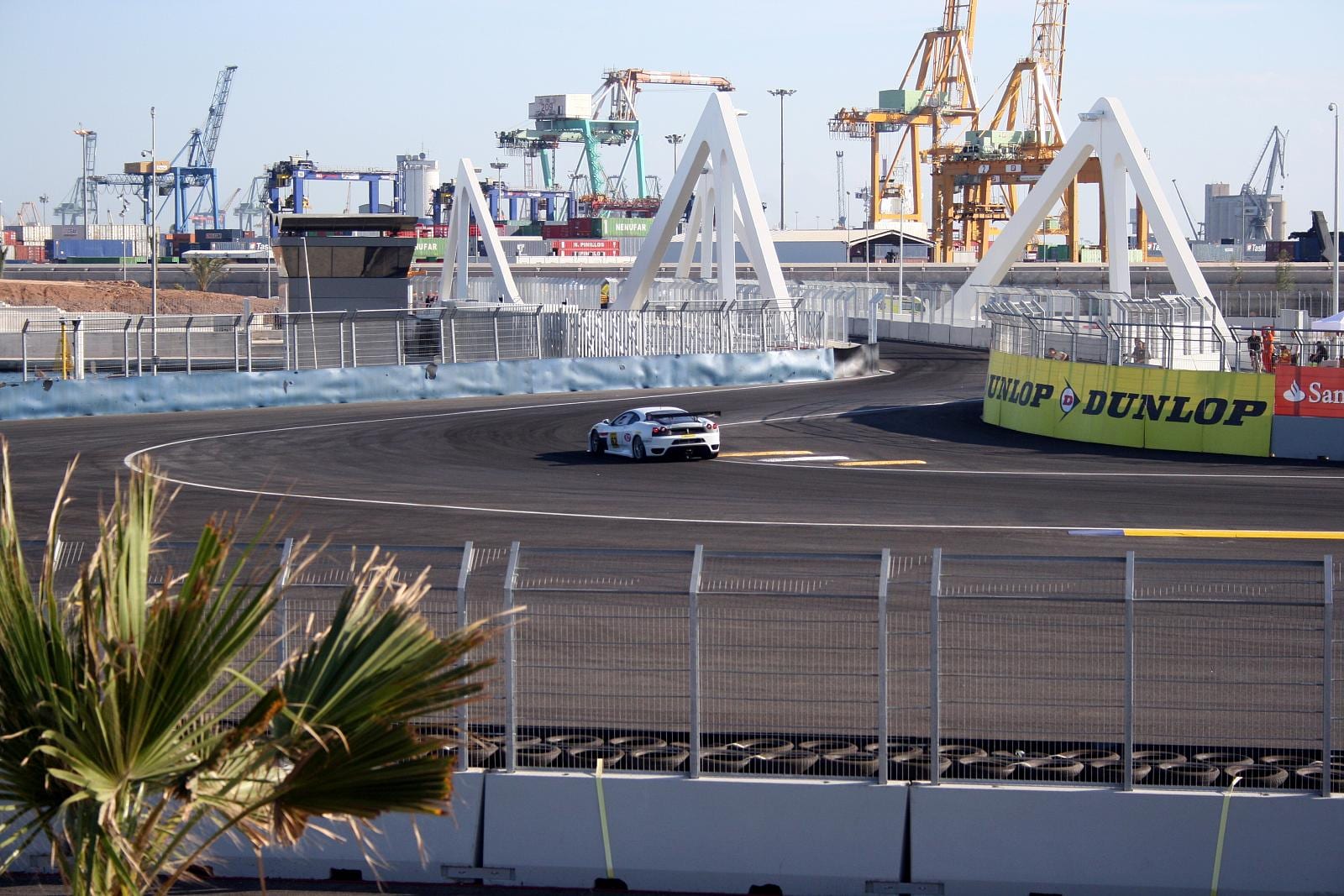
Valencia: the ghost in the harbour
Of all the tracks here, this is the one that looks most like a ghost town. Valencia hosted five European Grands Prix around its harbour, on a circuit reported to have cost £270 million (about US$365 million).
The end came when a plan to alternate the Spanish Grand Prix with Barcelona fell through. Nobody kept the place up afterwards. The track officially closed in 2013, and photos from years later show weeds along the walls and old barriers still sitting by the road.
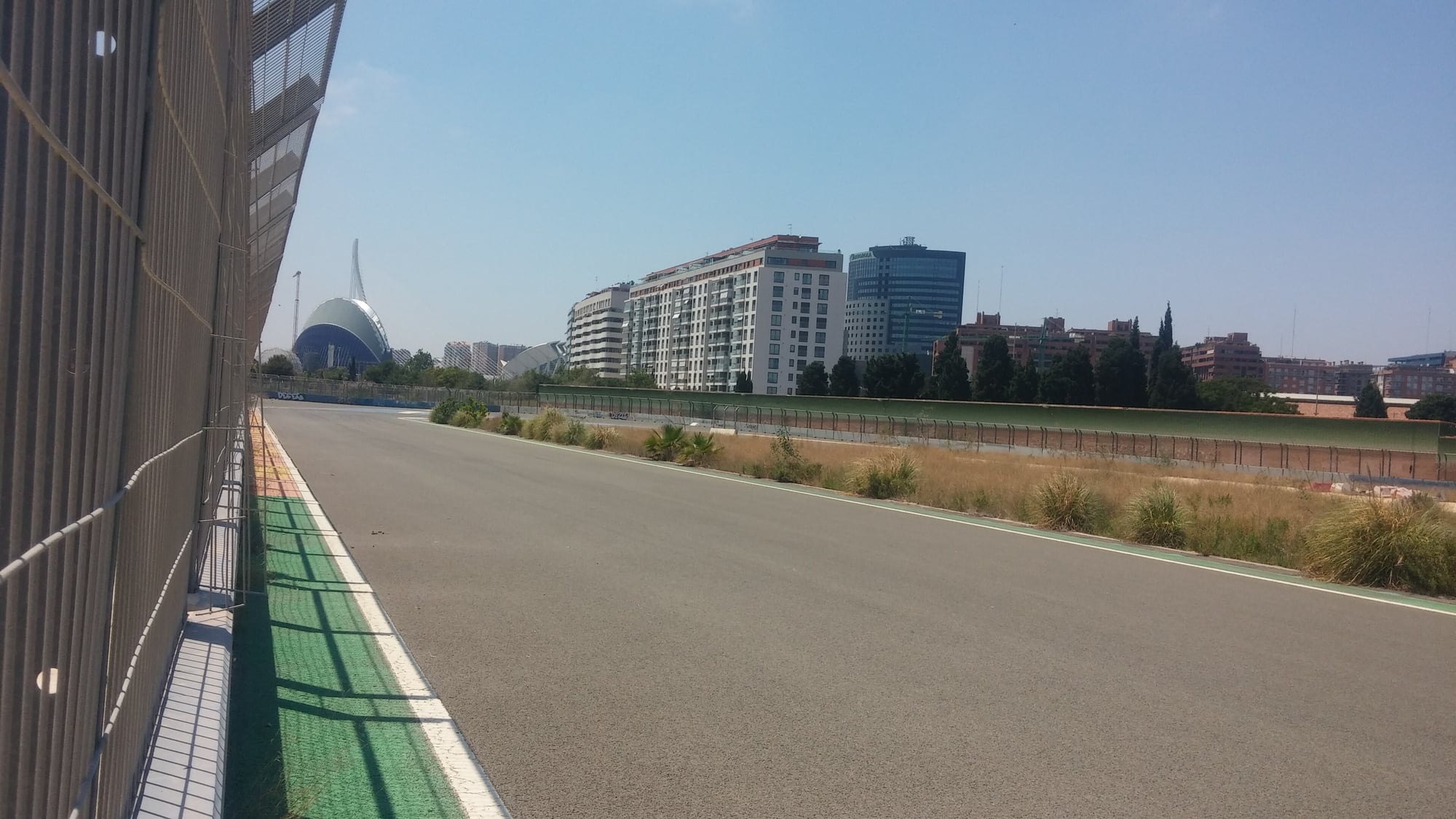
Weeds grow beside the empty track at the abandoned Valencia Street Circuit in 2018. Photo: GiusLipariPA/Wikimedia Commons, CC BY-SA 4.0
Yeongam: “a spectacular flop”
The Korea International Circuit was built more than 300 km from Seoul, and it was still being finished as the first race arrived. The FIA approved the track only 10 days before the 2010 Korean Grand Prix.
Reports of what it cost vary a lot, from 88 billion won (about US$77 million) to £300 million (about US$405 million). What isn’t in doubt is how it turned out. It lasted four races, and a South Jeolla Province official told the New York Times in 2015: “We ended up with a spectacular flop.”
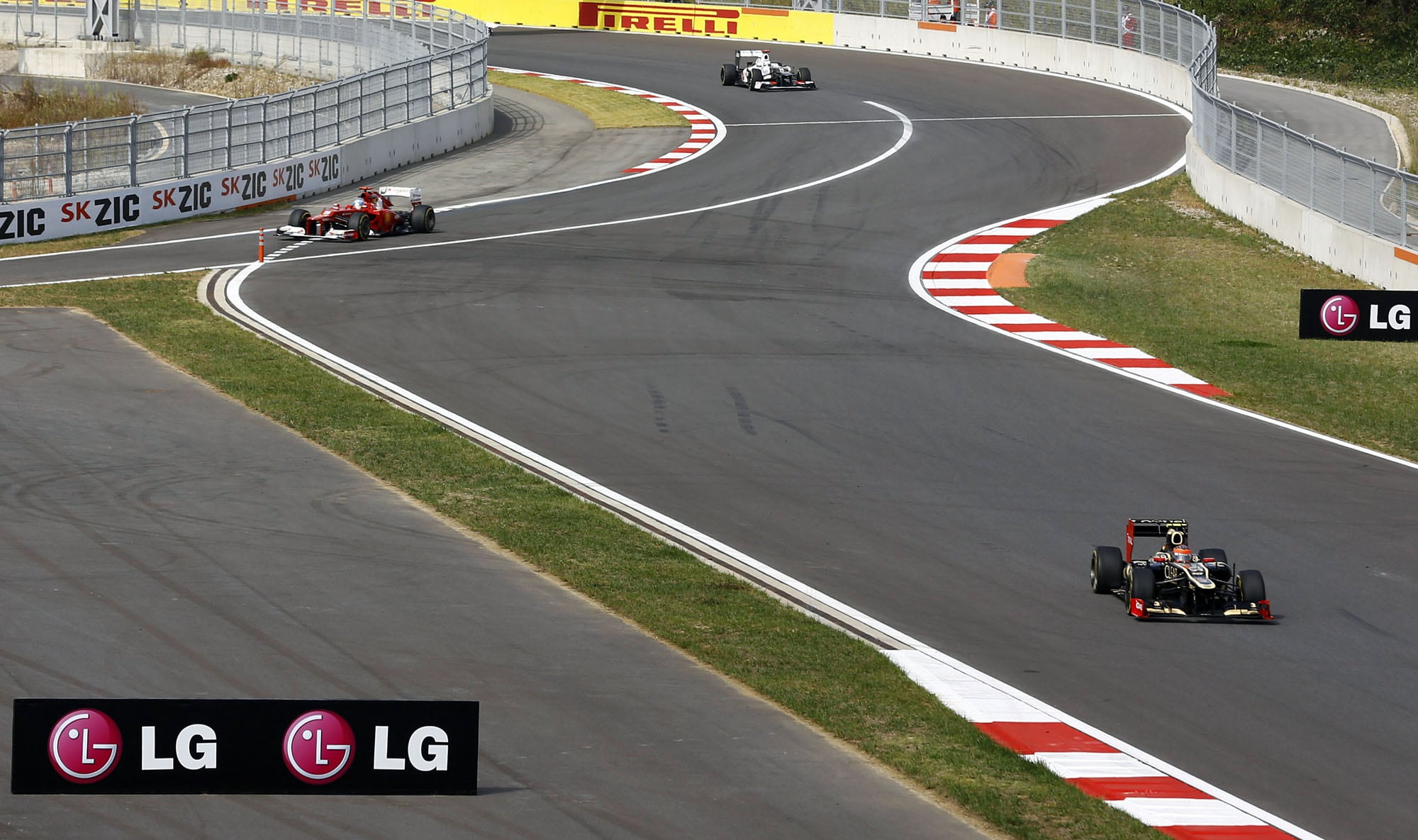
The Korean Grand Prix at Yeongam in 2012, a year before F1 left. Photo: LG Electronics/Wikimedia Commons, CC BY 2.0
It isn’t completely empty. South Korea’s Superrace Championship still runs there, but that’s a long way from the world stage it was built for.
Buddh: taxes, a quarantine and a one-off MotoGP
India’s only F1 track cost about ₹2,000 crore (about US$210 million). It lasted three races before a tax dispute with the Uttar Pradesh government ended the race.
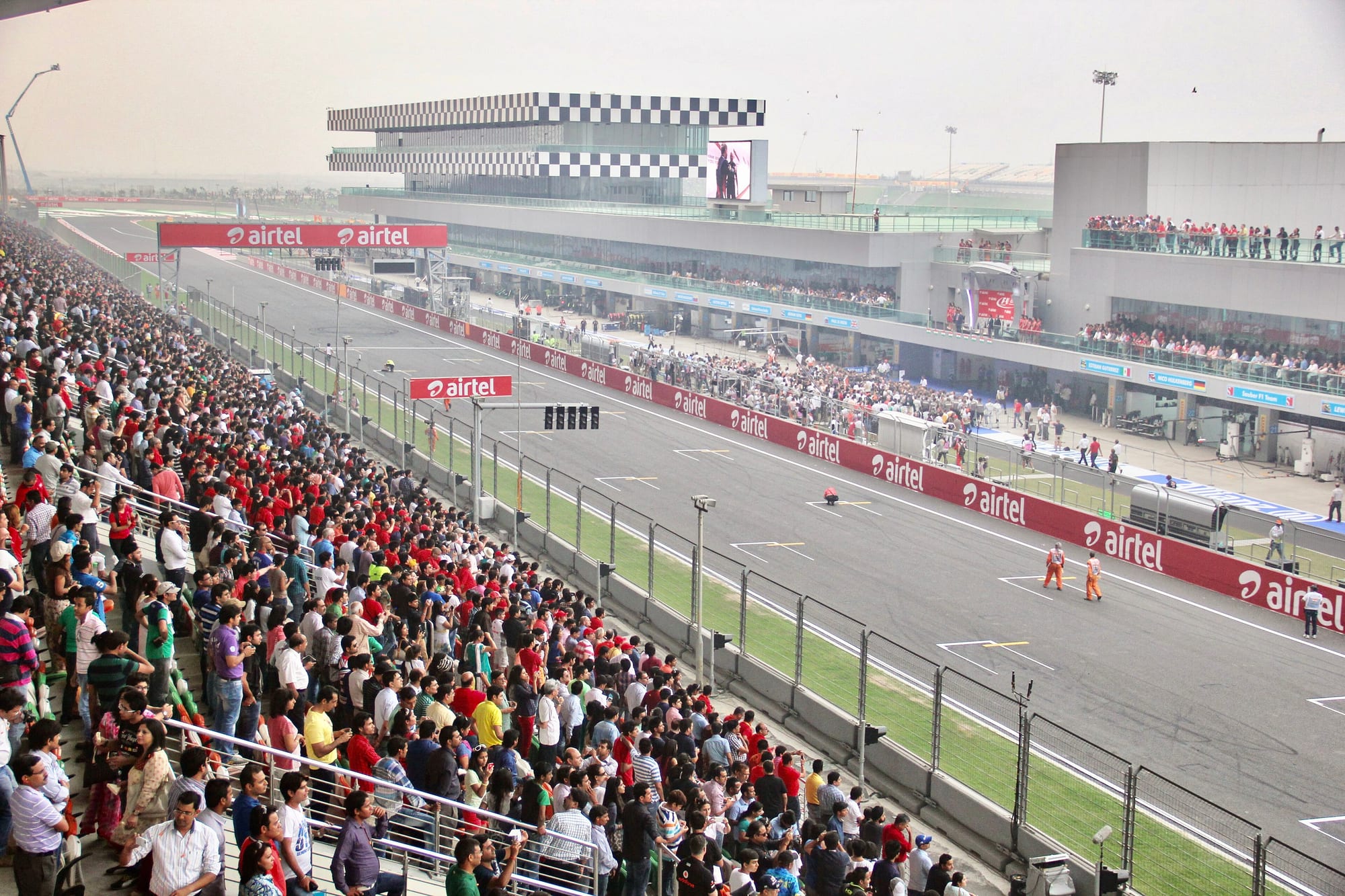
The crowd on the main straight at the 2013 Indian Grand Prix, the last F1 race at Buddh. Photo: Ank Kumar/Wikimedia Commons, CC BY-SA 4.0
What came next was odd. The local authority sealed the circuit in early 2020 over unpaid dues, and during the first Covid lockdown it took in migrant workers. MotoGP raced there once in 2023, but its planned returns never happened.
There’s still some hope. Adani Group is reportedly preparing a plan to bring F1 back if it completes its takeover of the owners, and the state government has signed a deal aimed at bringing MotoGP back. Neither comes with a date.
Sochi: taken apart
The Russian Grand Prix ran through the Olympic Park from 2014, on a circuit with US$195.4 million in government money set aside for it. F1 ended its contract after Russia’s invasion of Ukraine in 2022.
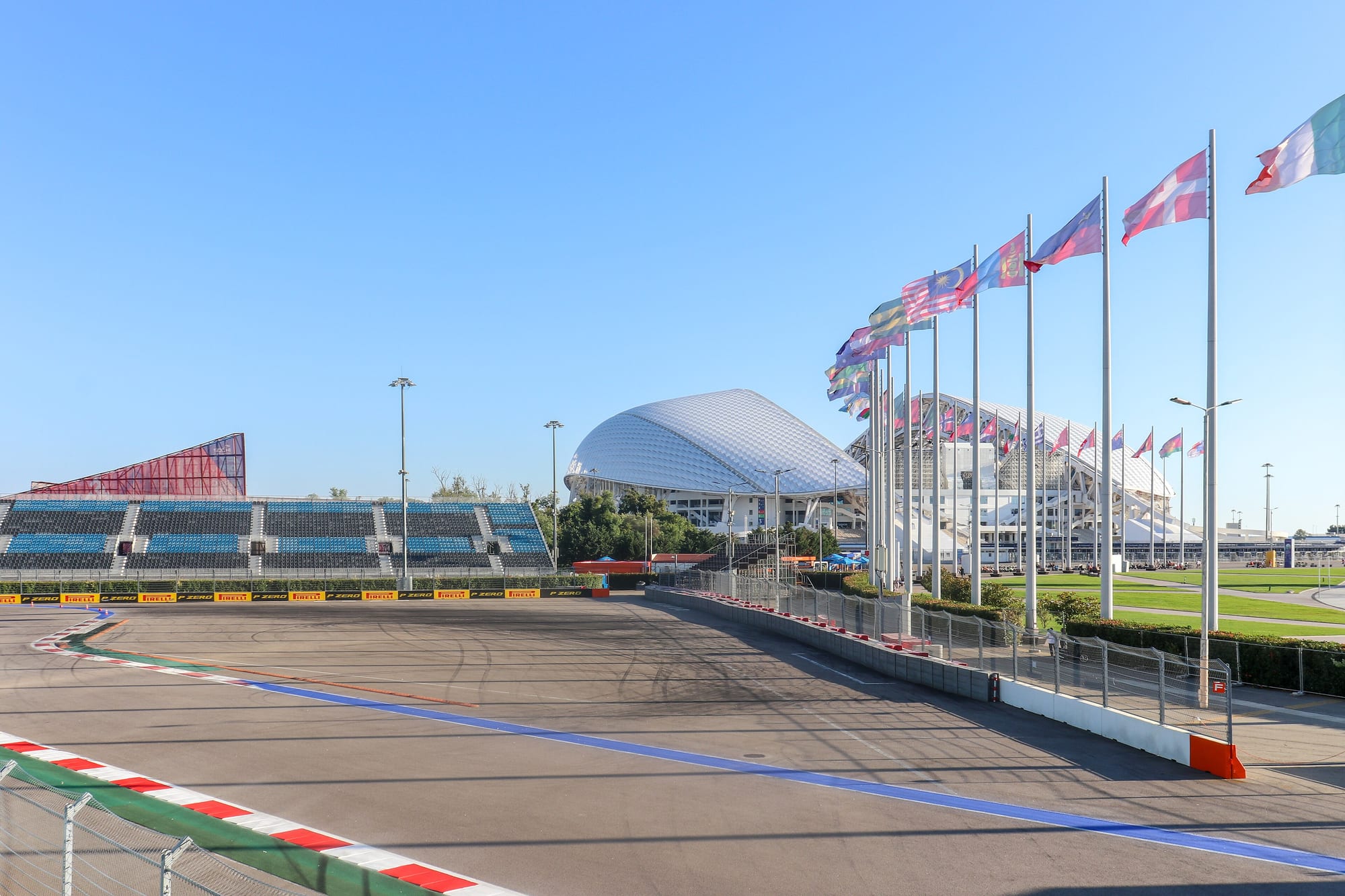
The Grand Prix track in Sochi’s Olympic Park in 2020, with Fisht Stadium behind it. Photo: Stolbovsky/Wikimedia Commons, CC BY-SA 3.0
With international racing gone, the Grand Prix layout closed in November 2023 and was dismantled. Only a 2.3 km short track remains, renamed the Sirius Autodrom in 2024. The track F1 raced on no longer exists.
Caesars Palace: the car park
Las Vegas is on the F1 calendar now, but its first attempt was a lot less glamorous. In 1981 and 1982, F1 raced around a car park at the Caesars Palace hotel. Crowds were tiny, and the hotel lost a lot of money.
The site has long since been built over, and The Forum Shops at Caesars stands there now. F1 came back to the Las Vegas Strip in 2023, with considerably more neon.
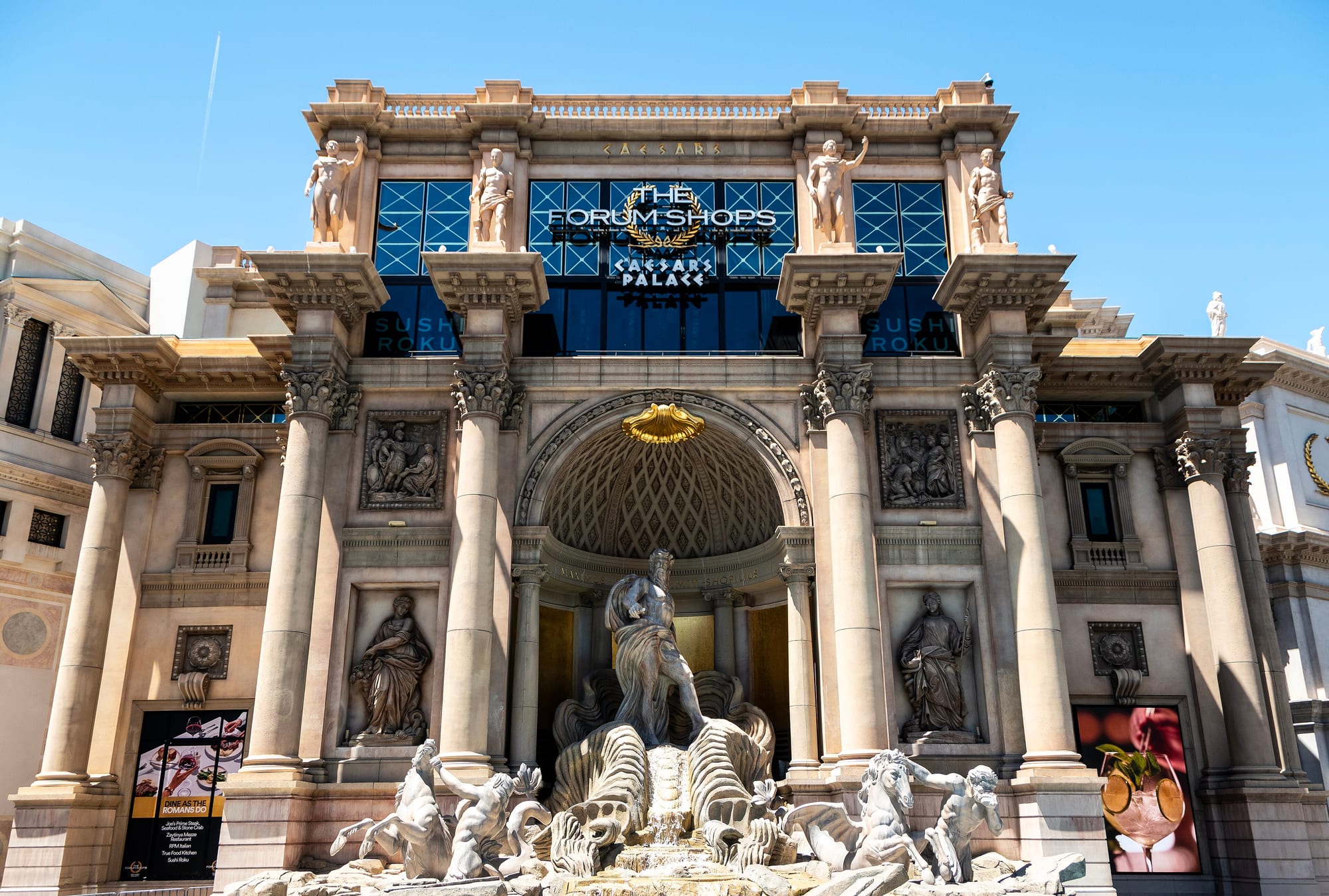
The Forum Shops at Caesars, which now covers part of the old track site. Photo: Julian Lupyan/Wikimedia Commons, public domain
Magny-Cours and Hockenheim: still racing, just not F1
Not every story ends in weeds. These two simply carried on without F1.
Magny-Cours hosted the French Grand Prix for 18 years, but it was remote, with poor access and not enough hotels. It lost the race after 2008. Today it holds World Superbikes and GT racing every year.
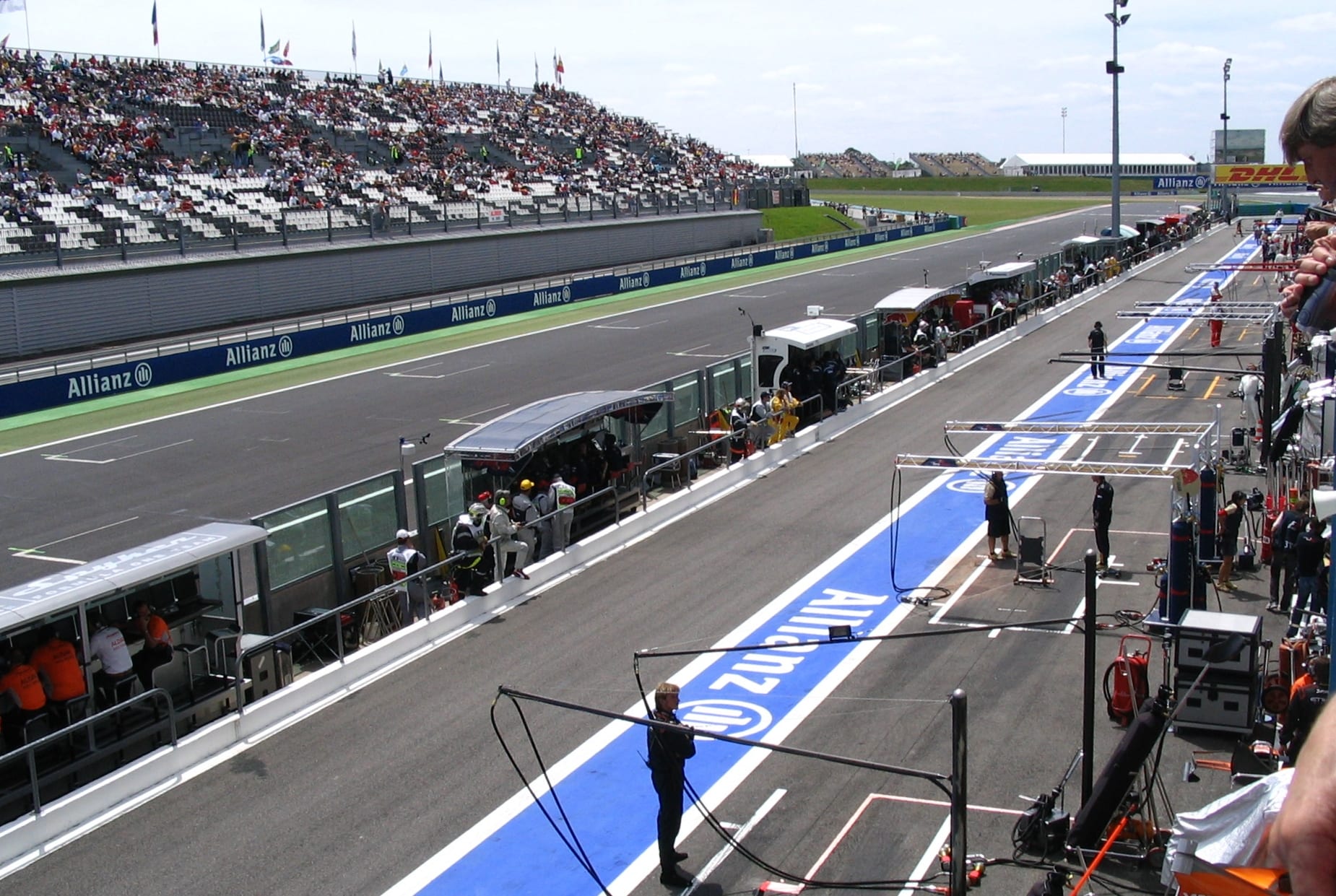
The pit lane at Magny-Cours during the 2007 French Grand Prix, a year before F1 left. Photo: V.Charpiat/Wikimedia Commons, CC BY-SA 2.5
Hockenheim last hosted F1 in 2019, after years of losses of up to €5.3 million (about US$6 million) per race. Its famous forest section had already gone. It was torn up and replanted with trees in the 2002 redesign, though you can still see the outline from the air. DTM and GT cars still race on the modern circuit.
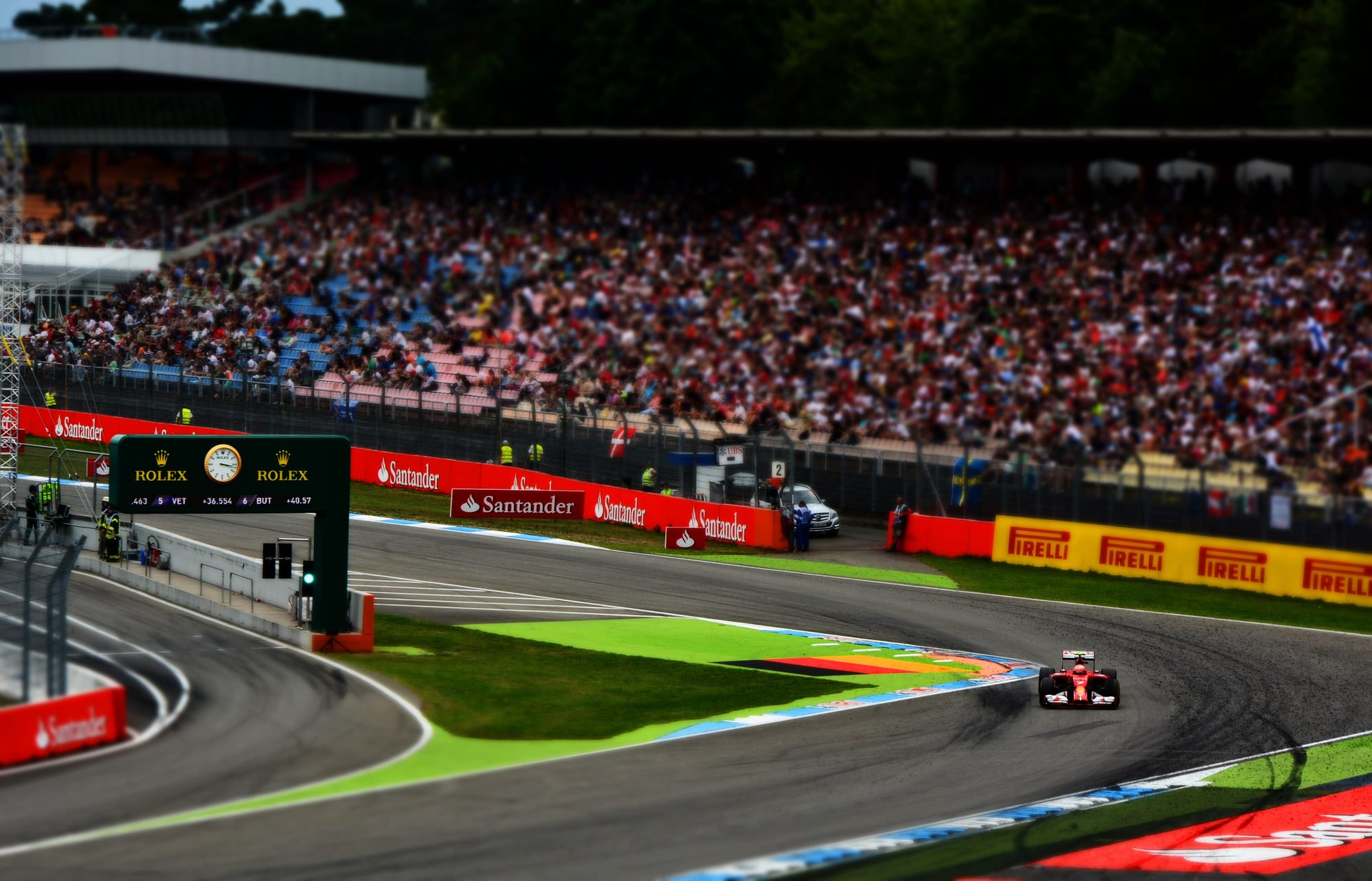
Kimi Räikkönen takes Turn 1 at the 2014 German Grand Prix at Hockenheim. Photo: Justin LaBerge/Wikimedia Commons, CC BY 2.0
Sepang and Istanbul: the ones that came back
Sometimes F1 needs a track it left behind, or a track decides it wants F1 back.
Sepang dropped out after 2017, a year early, because of rising fees and falling ticket sales. Then the war in the Middle East sent the 2026 Bahrain Grand Prix there as a stand-in. It was a great race and a hard weekend for fans, but it’s not on the 2027 calendar. “We let Formula One go and now it is very hard to get it back,” Sepang’s CEO said last year. A permanent return would cost more than RM300 million (about US$71 million) a year.
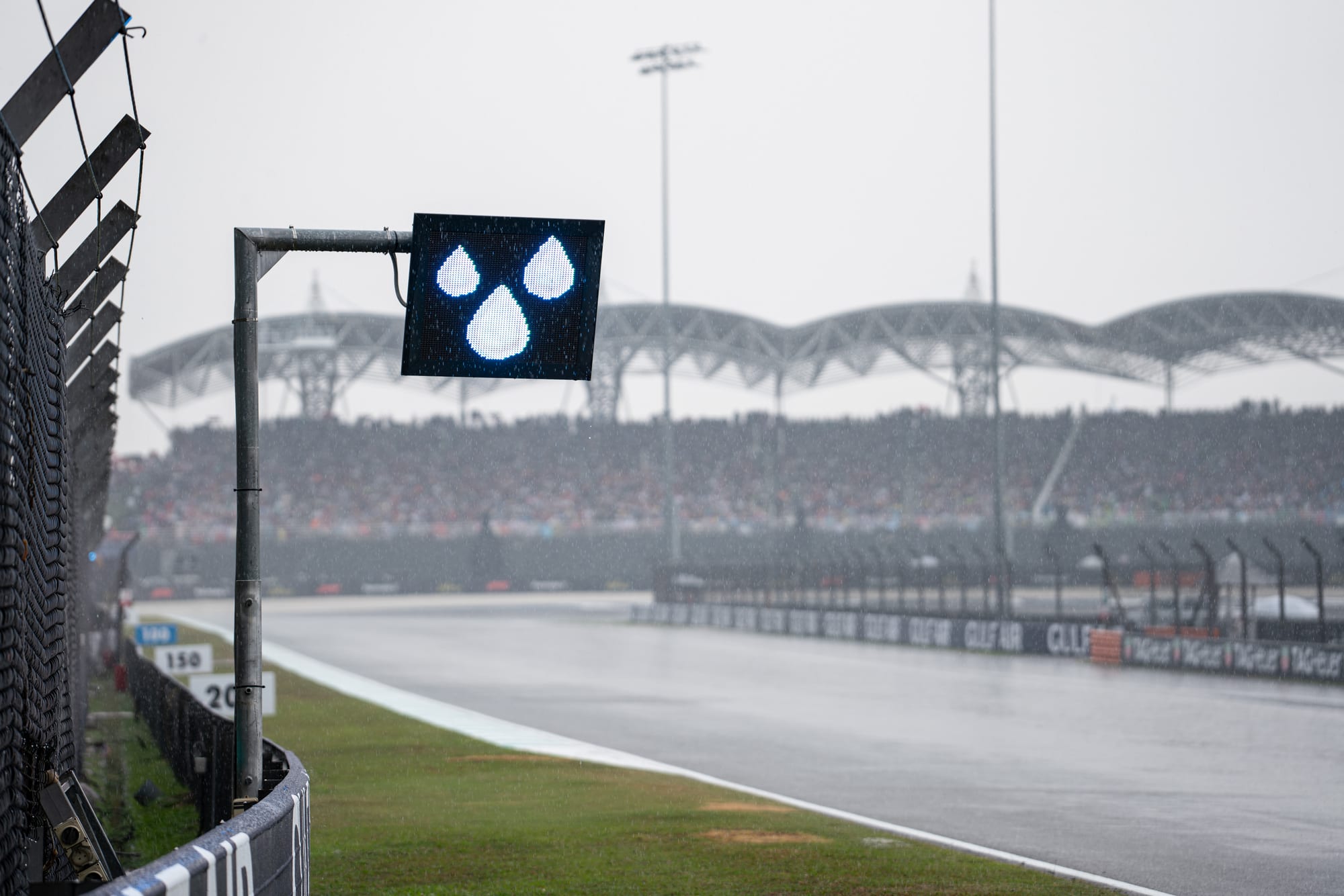
Rain soaks the track before the 2026 Bahrain Grand Prix at Sepang. Photo: Wan Mikhail Roslan/NurPhoto
Istanbul Park cost US$214 million against a predicted US$25 million. It lost its race after 2011, following a row over a fee that was set to nearly double from US$13.5 million to US$26 million. Covid brought F1 back as a stand-in in 2020 and 2021, and the track has now signed for at least five years from 2027.
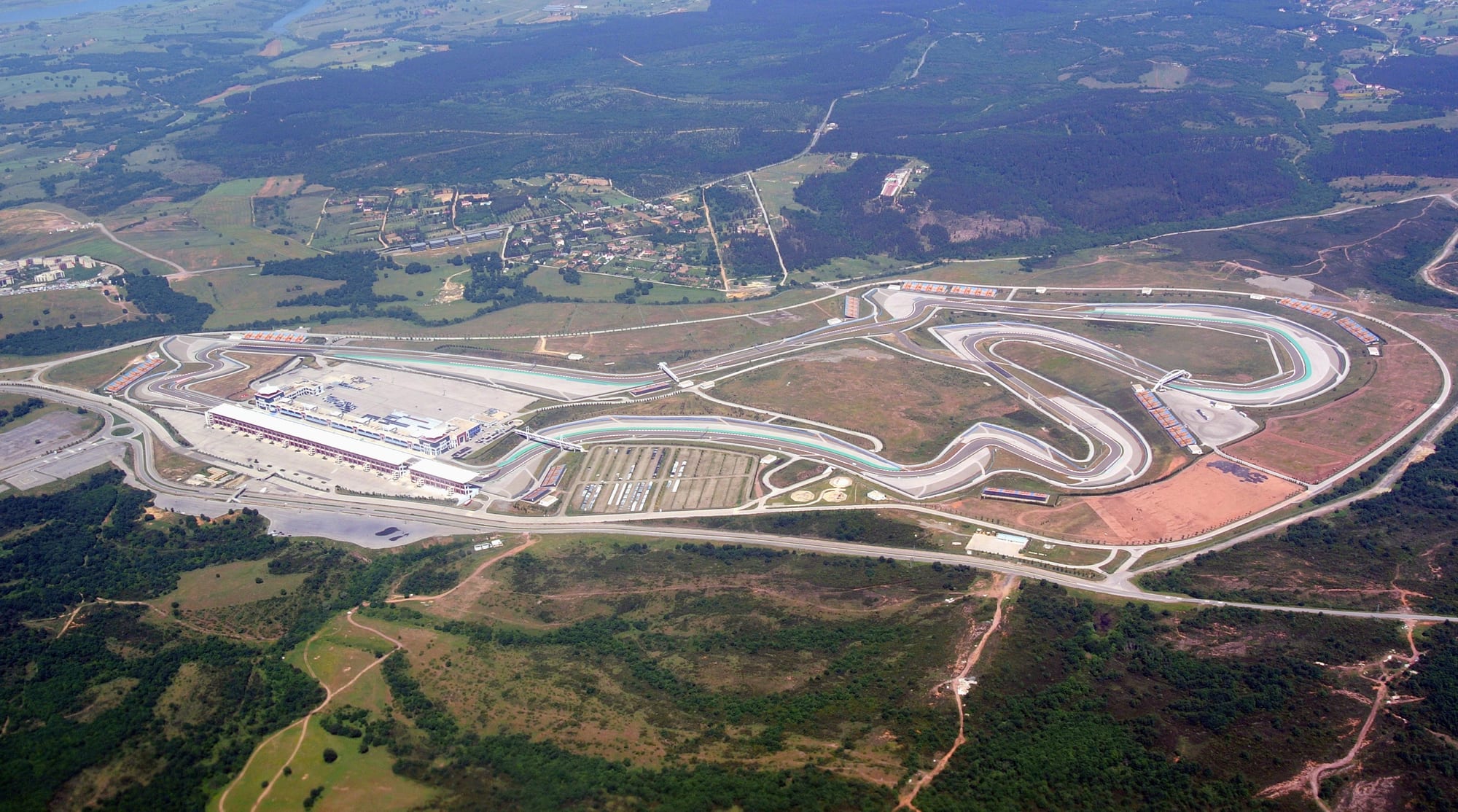
Istanbul Park from the air in 2013, between F1’s two spells there. Photo: Adbar/Wikimedia Commons, CC BY-SA 3.0
Who’s next?
The list keeps growing. Neither Zandvoort nor Barcelona is on the 2027 calendar, and Imola, which last hosted a Grand Prix in 2025, is being lined up as a backup if the Middle East races can’t go ahead.
Those three will be fine, because they have other racing and real history to fall back on.
Our view
The tracks that survive are the ones that had a life before F1, or found one without it. Magny-Cours and Hockenheim still have other series to run. The ones in trouble are the ones built mostly for F1, often with public money, in places without much racing of their own.
Valencia and Yeongam are the warning. Sepang and Istanbul are the twist, because they show that a circuit F1 has walked away from can still be useful when it needs one. If you’ve got a big enough cheque, it turns out F1 is always willing to come back.
Planning a trip to a track that’s still on the calendar? Our circuit guides can help, and here’s what every 2027 race costs.